
Stay on a farm or by the sea - in wonderful Österlen!
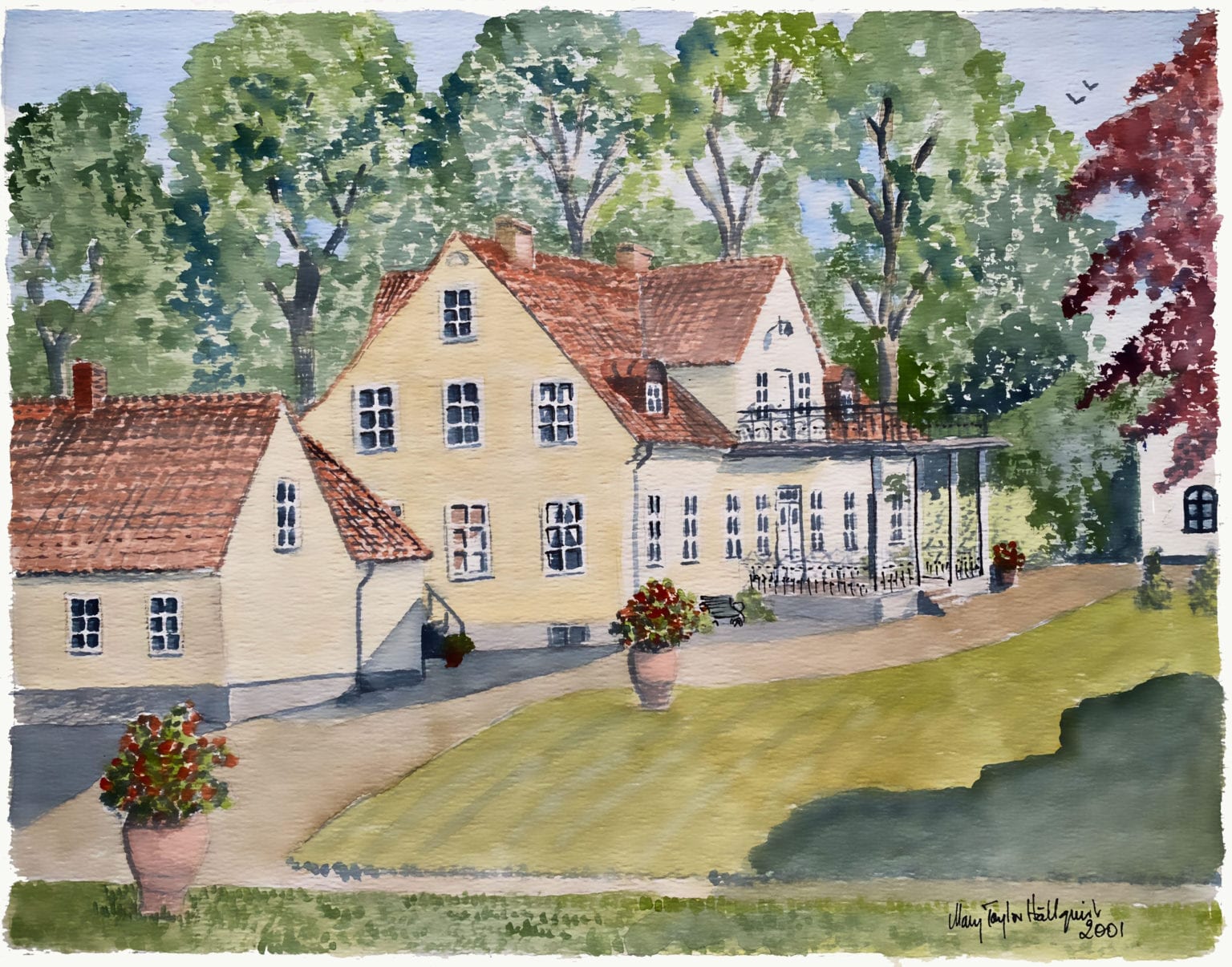
The oldest we know about Borrby Kungsgård is that in the 15th-16th centuries it was called Borrby Hovgård. The owner of the farm at that time was the Archbishop of Lund. The farm's task was to collect money for the Archbishop and to keep the people of the parish under supervision. The Archbishop could also stay on the farm when visiting the area.
The first person to live on the farm mentioned by name was Hendrik von Lunneborg and was a nobleman from Germany. He became the tormentor of the Borrby farmers. Hendrik charged too high taxes and allowed himself to be bribed with illegal oat deliveries. He lost the estate after he shot a farmer in the court proceedings where he was accused of various crimes. Hendrik received a royal pardon for his crime, probably because he was of noble birth.
After the Reformation, the estate belonged to the Danish King Christian IV. The estate was managed by the military man Jörgen Hondroff who also owned Rönningholm, through marriage. He was a commander in Järrestad district, but lived mostly at Rönningholm and died in 1640.
A new German nobleman appeared by the name of Joackim Grubber. During Grubber's time, the farm was burned down in 1644 by the Swedes. Grubber was a naval officer, Admiral and participated in the war against the Swedes but never signed the act of sovereignty in 1661 with Sweden. Nils Lafturios signed for Borrby.
The farm thus came into Swedish ownership as Bornholmskt Vederlagsgods and became the Ryttmästarboställe of the South Scanian Cavalry. Charles XI made Borrby Gård a Kungsgård. The king then had the opportunity to visit the farm and stay with trusted friends. Charles XI is said to have been at Borrby Kungsgård 1/8 1690. By Kungsgård is meant older property, belonging to the crown, formerly the king's landed estate or residence for a royal confidant. Nowadays usually managed by the Domänverket.
1680 hade snapphanarna ett fäste vid Simrishamn och bönderna i Borrby var mycket fattiga vid denna tid, då skattebördan var alltför tung.
1684 kom Cristian Riddersköld som var personlig vän med Kungen, till Kungsgården. Riddersköld var en tapper krigare och hade varit med vid slaget om Lund, Halmstad och Landskrona.
In 1711, Horse Master Nils Ratzvill lived at Kungsgården. He was born in Vänersborg but had Hungarian blood in him. As a young man, he had spent a lot of time at the Lüneburg court. In 1723, Ratzvill was transferred from Borrbygård.
His successor was Gustav von Schlippenbach in 1724 and he was a true old Carolinian who had spent 15 years in Russian captivity. His title was lieutenant colonel in the Southern Scanian Regiment of Horse with the rank of cavalry captain in the Borrby Squadron. He was a very skilled warrior and negotiator. He also negotiated with the Borrby Village Men to be allowed to farm the grass homestead east and west of Kungsgården. The homestead that the village men had the right to and for that he had to pay two barrels of beer and 3 pots of brandy. Schlippenbach received his discharge in 1733 and moved to Sölvesborg where he died 10 years later.
New Officer in 1733 under the low roof of Borrbygård, was Henrik Johan Wolffelt. It was not a particularly comfortable residence, they had their cavalry masters at the Southern Scanian cavalry. It was still the same building as in Christian Riddersköld's time (late 17th century). Wolffelt had been involved in many adventures, including participating in the battle at Gadebusch in 1712, had been captured "under the crown of Denmark" in Tönningen in 1713, but escaped, and he had fought at King Carl's side at Fredrikshall in 1718. Henrik's name is also mentioned in 1742 in the Borrby Church Book together with his wife Countess Virginja Kruuse. A few years later he received his discharge and moved to Espinge, where he ended his days as a lieutenant colonel in 1763.
In 1748 the order of horsemaster passed and with it the residence to Kjell Christoffer Bennet. He was the first officer at Kungsgården who did not smell of blood. He had been a courtier in his youth and must have frowned when he saw Borrbygård's ramshackle buildings. He wanted a more stately residence and there was immediate talk of a new building. The new building was completed in 1751 and was 28 1/2 cubits long and 16 cubits wide. The walls were plastered and yellow, except for the corners, which are white as well as the cornices on both sides. The same design that was seen until 1923, when it was partially rebuilt. There were two houses, a larger one for the Officers and a smaller one for the servants.
It does not appear that Bennet ever moved into his newly built house as he passed away a few years later. Instead, Daniel Bernard Gyllenram enjoyed it. He was married to Baroness Vilhelmina von Nolcken, who was known to be a piece of cake. The officers were known to have heiresses in the town, however, the Baroness fired a gun so that Gyllenram lost hearing in one ear. One thing led to another and finally they were legally divorced.
The next man was Major Holger Anders Rosencrantz, who had distinguished himself in the Pomeranian War where he was seriously wounded in the right shoulder. He died in 1783 at Lillö Kungsgård near Kristianstad but is buried in Vallby Church in the family's grave.
His wife Eleonore Stjernstedt remarried the Riksråde Johan Liljencrantz, who was so infatuated with his wife that he named his property near Stockholm after her. Norsborg Stockholm's waterworks, named after Rosencrantz's wife from Borrby.
Christan Barnekow had been a Page at court as a boy, then he joined the regiment as a cornet (the lowest officer title, standard bearer) and rose rapidly through the ranks. In 1801 he had the rank of colonel. In 1813 he died and by then had long since left Borrby.
The next lord on the estate was Nils Silfversköld, who managed the Kungsgården as an inspector. He became known as a peasant tormentor because the peasants would "hover" at Kungsgården. There were many lawsuits between the villagers and Kungsgården.
In 1858 the last officer, Ernst Bogislaus von Segebaden, took over the residence as commander of the Borrby squadron. He died in 1892 and was the army's oldest serving officer at 75 years old. With his passing, the saga of Borrby Kungsgård as an officer's residence ended.
The royal estates, which numbered about 10 in Skåne, were transferred to the Crown Estate and leased out.
The first tenant was C F Karlsson, later Valfrid Jönsson and then his son Helge Jönsson. The last tenant at Borrby Kungsgård was Lars Helgeson. In 1993, all the Kungsgårds except Lillö Kungsgård and Tommarps Kungsgård were sold to the state.
And of course, Major Segerbaden still drives out to Kungsgården with a horse and carriage from Borrby cemetery to look at the farm. Especially early summer mornings when the haze is on, you can hear the carriage and horses, but you never see them.
Borrby Kungsgård was sold in 1993 to Henric and Kerstin Brinte, who continue to farm the farm together with their three children Lina, Elin and Oscar.
Hemvärnsgården
2018 – 2020 genomfördes och avslutades den senaste tillbyggnaden på Borrby Kungsgård. De nya husen ligger nere vid gamla Hemvärnsgården vid Borrbystrand, på så kallad ”utmark” som förr i tiden tillhörde de flesta gårdar. Boendet ligger i vår skog ca 350 meter från havet, enskilt läge i vacker natur omgiven av tallskog.
This land consisted of less fertile soil, a forest and associated fishing rights. On this so-called “outland”, the farm collected seaweed that was used as a soil improver, cattle grazed and the fishing rights gave the farm an extra income and food source. In addition, it was important to have access to wood to be able to fire in Borrby Kungsgård’s eight tiled stoves. In modern times, the Home Guard built two houses, one of which was used for overnight stays and the other for equipment for the actual shooting exercises that took place in the forest.
When we bought Borrby Kungsgård in 1993, shooting exercises were still being conducted down in the forest and the Home Guard continued to lease the land from us until 2002 when they decided to close down their operations as the association had too few members.
We often went down to the Home Guard Forest with the children and sometimes we watched as the Home Guard men pulled out their plastic bands in the forest to fence off the area in front of the shooting range before they started their practice. It simply said "shooting in progress" and then you had to stay away from the area below the shooting range. To this day you can still see the remains of the shooting range in the form of asphalt slabs that lie about 50 meters apart in the direction down to the sea.
We have currently built five accommodations down in the forest in the form of self-catering where you can rent all year round.
This project has received support from the EU via the County Administrative Board of Skåne County.


